
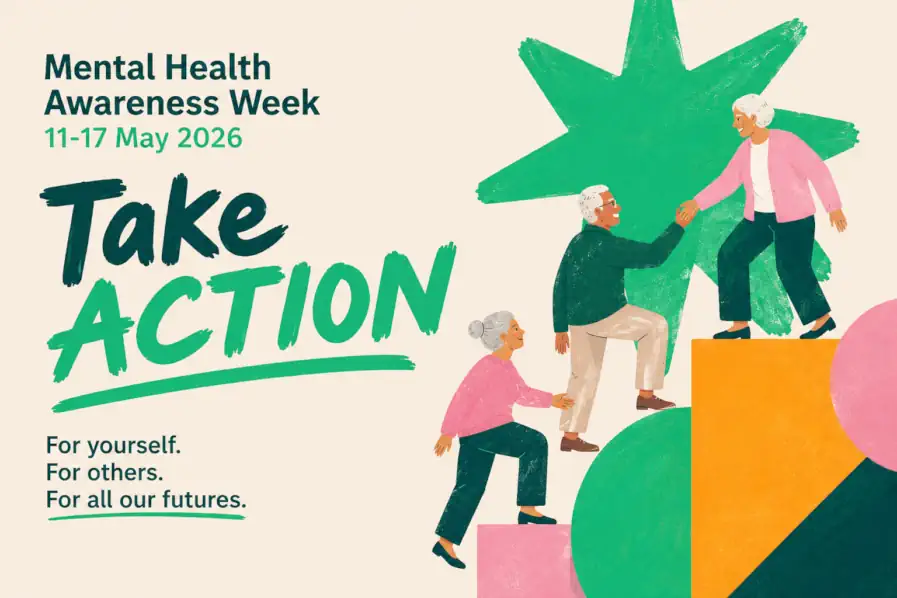
Mental Health Awareness Week 2026 takes place between Monday 11th and Sunday 17th May, encouraging people across the country to take ACTION in order to improve and protect their mental wellbeing. In this article, we will highlight the importance of participating in Mental Health Awareness Week before offering our insights on how you can support your own mental health and that of those around you.
Why Do We Observe Mental Health Awareness Week?
Across the UK, mental health problems are affecting the lives of millions of people; the charity Mind reports that one in four adults in England experiences mental health problems each year, while one in five are impacted by anxiety or depression in any given week.
Beyond the emotional distress caused by these conditions, poor mental health can damage relationships, careers and overall quality of life, leading to individuals becoming entrenched in their negative thoughts and feelings. Research from the Mental Health Foundation has even found a correlation between physical and mental wellbeing, stating that people living with long-term conditions are more than twice as likely to develop mental health conditions as those without ongoing health issues.
For many older adults, mental health problems are exacerbated by lifestyle factors such as reduced mobility, social isolation and bereavement, all of which can contribute to loneliness and depression. According to Age UK, 1.7 million people over the age of 65 regularly go an entire month without seeing friends, while more than 300,000 older people may not speak to their family or friends during the same time period. There is even evidence to suggest that poor mental health can increase the risk of developing chronic physical illnesses such as heart disease and cognitive impairments such as dementia.
For these reasons, Mental Health Awareness Week exists to encourage people of all ages to share their challenges rather than struggling alone in silence. Raising awareness about mental health conditions removes the stigma associated with them, empowering individuals to seek professional guidance while enabling their families, friends and carers to access the information and resources needed to provide meaningful support.
Taking ACTION for Mental Health
The theme for Mental Health Awareness Week 2026 is ACTION, highlighting the importance of taking steps to improve and prevent mental health issues as well as spreading awareness about these conditions. Increasing understanding of mental health has always been at the heart of Mental Health Awareness Week, but without using that knowledge to enact change in our own lives and within our communities, its impact can remain limited, leaving many people facing challenges that feel difficult to shift. For this reason, the Mental Health Foundation is encouraging people to turn their awareness into action to make lasting improvements for themselves and those around them.
The central message of this campaign is to take action in the following ways:
- For yourself – Prioritising your own mental health is about finding and committing to an action that works within your routine. Whether that means protecting time to rest, finding time to exercise or practise hobbies, or journaling to vent any negative thoughts, these simple habits can steadily build resilience.
- For someone else – Supporting those around you similarly begins with simple actions. Scheduling regular visits or phone calls with friends is an effective way to maintain a sense of closeness, while creating space for honest conversation without judgment. Within your workplace or wider community, this can extend to establishing assistance programmes or support groups where your colleagues and neighbours feel safe to share their concerns.
- For all of us – Holding our local and national governing bodies accountable for adequately funding and resourcing our mental services is essential to drive meaningful change within our society. Supporting organisations and engaging with campaigns are the best ways to place pressure on decision-makers, ensuring mental health is properly prioritised and that appropriate support is accessible to those in need.
Activities for Mental Health Awareness Week
From making small changes to your habits or outlook to acknowledging the needs of your family, friends and wider community, there are many different ways that you can take part in Mental Health Awareness Week to contribute to a more supportive environment around mental health. Some of our favourite ideas for this Mental Health Awareness Week include:
Challenging negative thoughts
When intrusive thoughts or unhelpful thinking patterns arise in your daily life, pausing to question and rationalise them can lessen their impact over time. Gradually replacing these thoughts with more balanced or realistic perspectives can promote a calmer and healthier mindset.
Positive lifestyle changes
Improving your sleep schedule, increasing physical activity or making an effort to maintain a more balanced diet can all have a noticeable positive impact on your mental wellbeing.
Staying connected
Committing to regular contact with your family, friends, or local community groups is crucial to alleviating feelings of social isolation. Even brief phone conversations or video calls with loved ones can strengthen your social bond, providing emotional reassurance and making space for healthy vulnerability.
Supporting loved ones
When friends and relatives are struggling to take action for themselves, offering them space to express their concerns is an important first step towards meaningful support. Once you have a better understanding of their problems, you can help guide them towards relevant services and resources, while gently encouraging them to make positive changes that improve their perspective and overall wellbeing.
Spreading awareness
Sharing information about mental health and empowering those around you to speak about their experiences plays a vital role in reducing stigma and fostering a culture where people feel more comfortable about seeking and offering support. For more information about how to raise awareness for mental health, there are an abundance of resources available to download courtesy of the Mental Health Foundation.

Mental Health Support with Companionship Care
Prioritising your own wellbeing and taking part in social activities are important for supporting positive mental health, particularly for older adults who live alone and have little or no family or friends nearby for regular support. Moments of conversation, shared activities and genuine companionship can make all the difference to elderly people, giving them a sense of belonging and reducing feelings of isolation.
Alongside our personal care and healthcare services, Blossom offers tailored companionship care designed to address this threat of isolation, ensuring the emotional wellbeing of our clients receives the attention it deserves. During your earliest discussion with our care coordinators, they will take time to understand your interests and personality, so that they can match you with carers who share your passions and have enthusiasm for engaging in your hobbies.
Much of our holistic approach centres around the idea that time and presence matter. By providing 50-minute minimum care calls, our carers are able to create space for genuine connections with their clients, in addition to satisfying their additional home care needs. For more information about our companionship or other care services, or for more ideas for Mental Health Awareness Week and taking action with your own wellbeing, please get in touch with your local Blossom team today.